Somewhere around the point where the last of the light goes, a familiar path becomes a different place. Landmarks you have been leaning on all afternoon vanish, distances stretch, and the map in your hand suddenly demands more attention than your feet do.
None of that is a problem in itself. Night walking is one of the best ways to make the hills feel new, and with a little planning it is rarely harder than daylight walking — just slower, simpler and more deliberate. These are the skills that matter most.
You lose the two things you have been navigating with all day without noticing: scale and confirmation. From a summit in daylight you can see the whole leg ahead, spot the gate at the bottom of the slope and know you are on track. After dark you can see the next ten metres of ground. Every leg becomes a series of small commitments.
Depth perception weakens, so rough ground takes longer than it looks. Expect to be slower: a leg that took an hour in the afternoon may take ninety minutes at night. Add cold, tiredness and the way a headtorch flattens the shape of the terrain, and the sensible answer is to plan a shorter route than you would attempt in daylight and give yourself extra time. Nobody has ever regretted finishing early.
Brighter is not automatically better. A beam on full power washes out the ground in front of you, destroys your night vision and does the same to anyone walking with you. Use the lowest setting that lets you read the terrain a few steps ahead, and angle the beam down rather than into the distance.
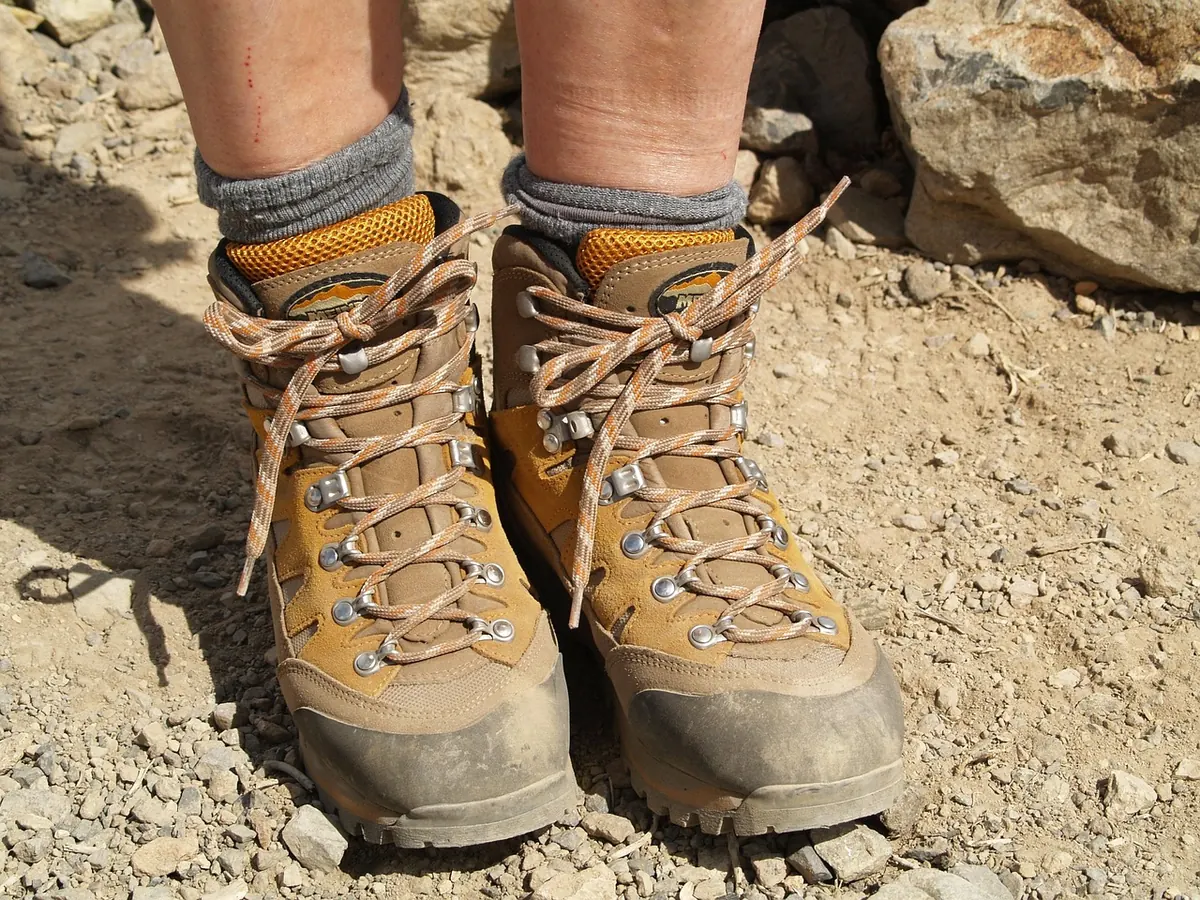
Fit matters too. A headband that does not wobble keeps you looking where you are going instead of fiddling with straps. Tilt the lamp so the brightest pool of light falls two or three steps in front of your boots.
A handrail is any linear feature running roughly the way you want to go. Walls, fences, streams, ridgelines, forest edges and paths all qualify. Instead of holding a bearing across featureless ground, you walk alongside something you can find again if you drift.
Keep the handrail a few metres to one side — close enough to see, far enough not to trip over — and use every corner, gate and junction as a tick on your mental list. “Wall bends left, stream joins from the right, second gate” tracks progress far more reliably than counting paces alone. Just remember that maps age: fences are removed, walls collapse, paths fade. If the handrail disappears, take a fresh bearing rather than chasing a line that may not exist.
An attack point is an obvious feature close to a tricky target: a lone crag, a stream junction, a fence corner, a bridge. Rather than trying to hit a small spot from 800 metres away in the dark, walk to something you cannot possibly miss, then take one short, careful leg to the target.
Aiming off works the same way. If you need a footbridge over a stream, deliberately aim a few degrees to one side of it. When you meet the water you know exactly which way to turn, instead of arriving somewhere on the bank with no idea where the bridge is.
Night navigation is mostly a planning skill. Do the thinking at the kitchen table, not on a dark hillside with cold hands.
Fewer legs beats clever legs. Choose long handrail sections, big obvious turning points and paths, even where that means walking further. A slightly longer route on a track will beat a shorter one across pathless tussocks every time.
Write the plan down. A small route card with each leg’s bearing, distance and confirming feature keeps your hands out of your pockets and your attention on the ground. Laminate it, or at least keep it in a map case.
Groups spread out at night, because the person in front looks like a moving shadow and the person behind walks in half-light. Agree on a tail walker, keep the gaps short, and count heads every time you stop. Put the most experienced navigator where they can see everyone, which is often at the back.
Keep stops brief, add a layer before you get cold rather than after, and eat on the move. Tell someone at home your route, your estimated time and what to do if you are overdue.
Build the skill gradually. Practise a familiar lowland path in the dark first, then a hill you know well, then somewhere new. Try one short leg with the torch off in a safe enclosed place, just to feel how much you can still see under moonlight; the aim is not to walk blind but to trust the ground more.
Then the essentials: a working headtorch, spare batteries and a second light, a compass you have actually used, a paper map you can read with cold hands, a whistle and a phone in a dry pocket. Check the forecast, and give yourself permission to turn around.
Darkness does not make the hills more dangerous. It takes away information, and good navigation is simply a way of putting that information back — one bearing, one handrail and one careful leg at a time.
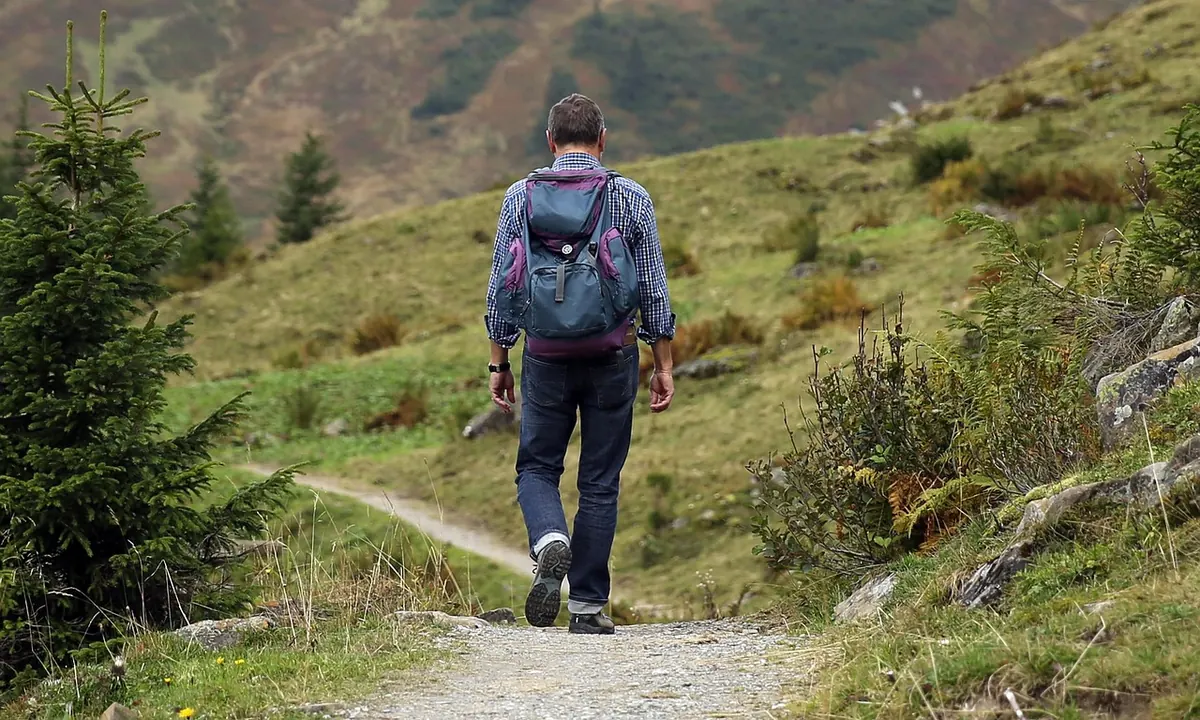
Photo: Hermann / Pixabay