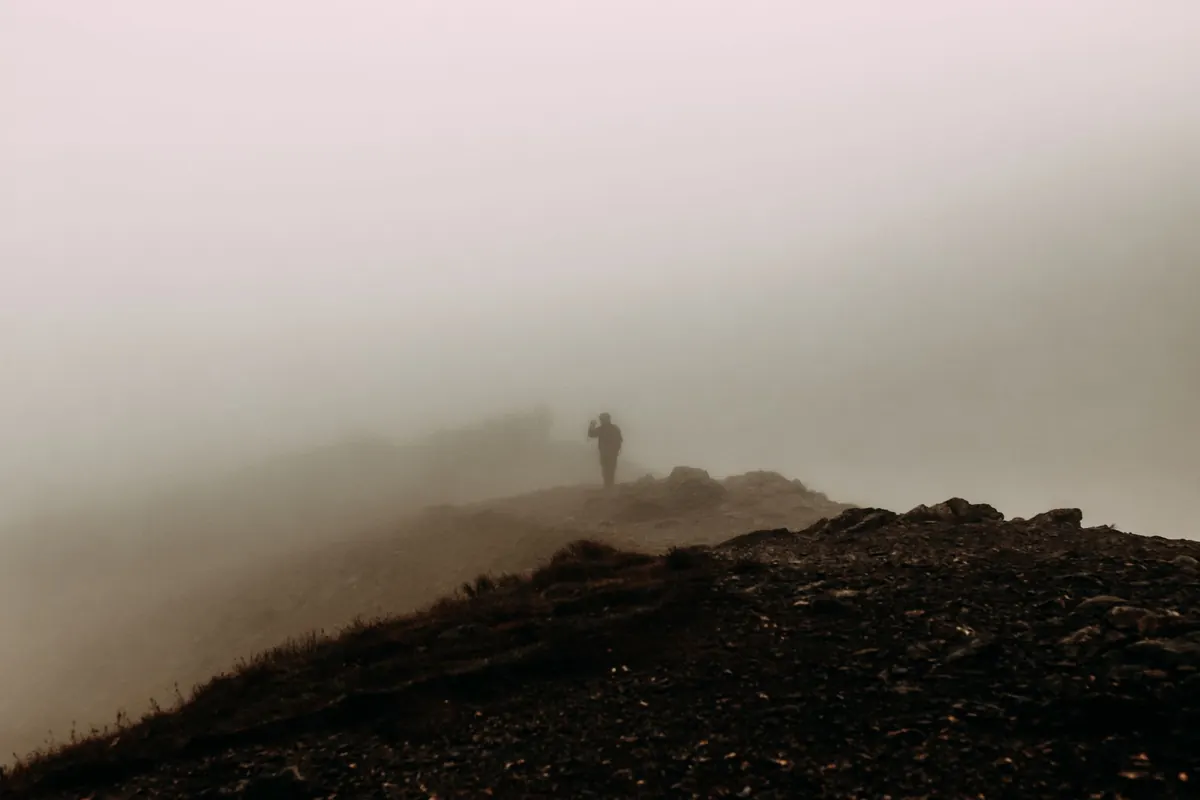
The cloud comes down quickly on a British hill. One minute you can see the ridge ahead; ten minutes later the world has shrunk to a grey circle thirty metres across, with no horizon and no sky. Navigating in that is not a different discipline from the navigation you already know. It is the same skills performed with more discipline and much less forgiveness. The hill has not changed. What has gone is your ability to check your work at a glance.
Most foggy-day problems are set up an hour earlier, in clear weather. Treat the following as routines rather than precautions, because they cost you nothing and they are worth a great deal later.
On a clear day you judge distance by looking. In fog you have to measure it, and there are two instruments available: your legs and your watch.
Pace counting is the more reliable of the two, but the numbers are personal. Measure yours properly. On a track, count double paces over a known hundred metres. Then do the same on tussocky ground, then uphill, then downhill. The figures will differ, often by a third, and those differences are the ones that matter. Keep track of the hundreds with something physical — move a stone between pockets, or tie a knot in a cord — because counting to four hundred while also reading a map is a good way to arrive at five hundred.
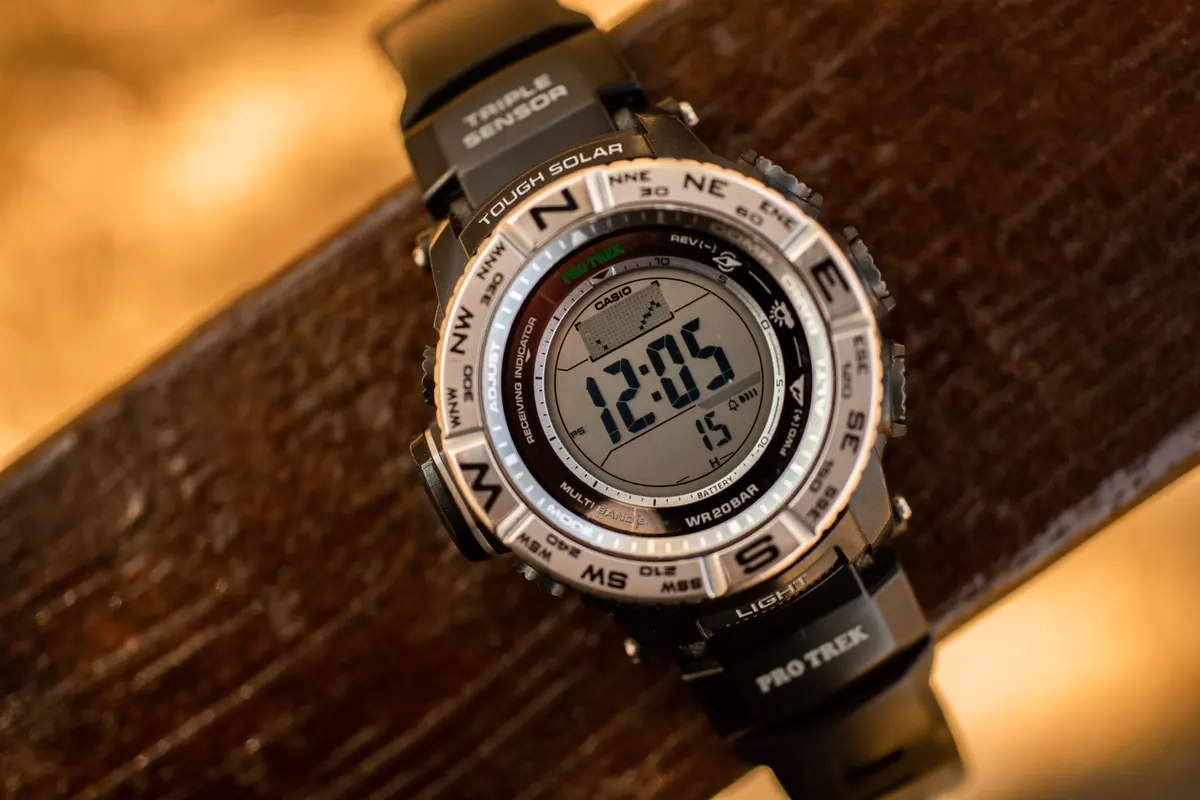
Timing works alongside it. A common planning rule is roughly four kilometres an hour on level ground, adding about a minute for every ten metres of ascent, with more allowance for bog, heather or a heavy pack. In poor visibility you will usually go slower than you think, not faster. If your watch and your step count disagree, that disagreement is information: stop, and work out where you actually are before walking on.
Set the compass with the map, not with your memory, and hold it flat and level in front of you. Then use the ground in front of you as a series of short targets. Pick out a rock, a tussock or the darkest shape in the mist, walk to it, then check the bearing again and pick the next one. Walking twenty or thirty paces and re-checking is not slow. Walking three hundred metres in roughly the right direction, ending up on the wrong spur, is slow.
Two techniques are worth knowing well. Aiming off means deliberately heading a little to one side of your target so that you meet a linear feature — a stream, a fence, a wall — and then know exactly which way to turn along it. Back bearings, your heading plus or minus 180 degrees, let you retrace a leg accurately and confirm that a feature you have found is the one you think it is.
Expect to drift. Almost everyone veers off a bearing without realising it, especially on a slope or in gusty wind, and the sensation of walking straight is not evidence that you are. Trust the needle over the feeling. “I'm sure the path is just over there” is one of the more expensive sentences spoken in fog.
In good visibility you navigate by looking ahead. In fog you navigate by collecting features as they arrive, usually within a few dozen metres, and building the picture as you go. The vocabulary is worth having at your fingertips:
Contours do much of this work. Count them between two points to judge how much climbing is involved, and notice whether the ground should be falling away to your left or right. If the slope under your feet contradicts the map, the map is right and your assumption about your position is wrong.
Fog magnifies small mistakes. A headcount at every stop, taken out loud, prevents the worst of them. Appoint someone as tail walker so nobody is quietly at the back on their own. Keep the group close, closer than feels natural, and agree before you set off that nobody leaves the group for a quick look at anything.
Agree signals too. Six blasts on a whistle in a minute, repeated after a pause, is the internationally recognised distress signal; three blasts is the acknowledgement. Set a turnaround time at the start of the day and treat it as fixed. Turning back is a decision made in good conditions by a sensible person, not a failure in bad ones.
Stop. Sit down, put on a layer, eat something, drink something. Almost every navigation error gets worse when it is walked out hopefully. From a settled position, work backwards to the last point you were genuinely certain of, and return to it — the reverse bearing, honestly walked, will get you there.
If you are properly lost, cold and short of daylight, find the best shelter you can, get out of the wind, and stay put. Call 999, ask for the police, then ask for mountain rescue, and give your grid reference if you have it. If a call will not connect and you have registered for emergency SMS, a text to 999 can sometimes get through. Moving in fog with no idea of your position spends energy you may need later.
None of this works on the day it is first learned. Count your paces on a clear walk and write the numbers down. Set bearings when you can see perfectly well, and follow them anyway. Identify handrails and catching features on familiar ground so that you recognise them when they are grey shapes in the mist.
Fog rewards the boring routines: the check every few hundred metres, the headcount, the bearing taken properly. Do those things often enough in good weather and they become automatic, which is exactly what you want when the cloud comes down and the map has to do the seeing for you.
Photo: Rachel Claire / Pexels